
Why your workwear wears out too fast — and how to fix it
A work outfit that only lasts a season is almost never a fabric problem. It is a washing-machine problem. Between the too-hot programme, the softener poured in out of habit, and the dryer turned up because everyone is in a hurry, a garment designed to last two years can give out in eight months — and nobody will make the connection.
The short version
- Wash at the temperature on the label, never above: it governs how colours and treatments hold up.
- Ban fabric softener on technical garments: it clogs the fibres and degrades breathability and flame-retardant properties.
- High-temperature drying does more damage than the wash itself.
- High-visibility garments carry a maximum number of wash cycles on the label — beyond it, they are no longer compliant.
The label is not a suggestion
Every professional garment leaves the workshop with a care label that is anything but arbitrary: it reflects the conditions under which the fabric, the seams, the treatments and any reflective bands were tested. Washing ten degrees hotter does not "clean better": it accelerates dye migration, stresses the seams and can distort panels.
Fabric softener, false friend number one
It softens, it perfumes, it gives the impression of well-treated laundry. And it leaves a greasy film on the fibres. On household sheets, that is harmless. On workwear, that film blocks the gaps in the weave: breathability drops, so does the ability to move sweat away, and water-repellent or flame-retardant finishes lose part of their effectiveness. Repeatedly softened polycotton paradoxically becomes hotter to wear.
- No softener on technical, high-visibility, flame-retardant or water-repellent garments — no exceptions.
- No bleach or chlorine-based detergent on fluorescent colours: the fading is irreversible.
- Use a detergent without optical brighteners on bright colours, which otherwise go dull.
- Measure the dose: excess detergent is not fully rinsed out and stiffens the fabric cycle after cycle.
The real culprit: drying
If you only change one habit, make it this one. High-heat tumble drying shrinks natural fibres, weakens elastane, gradually lifts transfers, and can cause differential shrinkage between fabric and retroreflective bands — hence those tell-tale ripples along the bands on a garment that has been overheated. Moderate drying, or better still air drying in the shade, extends an outfit's life dramatically.
In Morocco that is good news: nine months a year, the air does the job for free. Keep one reflex — dry in the shade rather than in full sun. Ultraviolet attacks dyes, and a navy dried in the sun all summer visibly loses depth.
The fabric always gets the blame. Nine times out of ten, it was the tumble dryer that finished the garment off.
Sorting is already maintenance
Putting a coverall soaked in machine grease and medical tunics in the same drum is a bad idea for everyone. Greasy soiling redeposits, light textiles go grey, and the cycle has to be pushed to compensate — which wears out everything else. A rough but consistent sort beats a sophisticated protocol nobody follows.
- Keep heavily greased or dust-laden garments apart from the rest of the load.
- Keep fluorescent colours away from dark ones, at least for the first few washes.
- Close zips and press studs before washing: left open, they snag and scratch other pieces.
- Empty the pockets. One forgotten knife can ruin a whole machine-load.
- Turn printed garments inside out: drum friction is the direct enemy of transfers.
In-house laundry or contractor: how to decide
Past a certain headcount the question arises: let everyone wash their own outfit at home, or hand the laundry to an industrial service. Home washing is free in appearance but uncontrollable — you will never know at what temperature, or with what. An industrial laundry runs standardised cycles (EN ISO 15797 describes these processes specifically for workwear), tracks each pass, and spots worn pieces before they fail.
Whichever option you choose, an outfit's lifespan feeds directly into what it actually costs you. We broke that down in our article on cost per wear — that is often where the gap between two seemingly identical offers really sits.
Frequently asked questions about workwear care
- At what temperature should workwear be washed?
- At the temperature on the garment's own label, which depends on its composition and finishes — typically 40 or 60 °C for everyday workwear polycotton. Going hotter does not improve the result and permanently damages both colours and seams.
- Can high-visibility garments be washed like anything else?
- No. No bleach, no softener, moderate temperature and gentle drying — and above all, track the number of cycles declared by the manufacturer. Once that number is exceeded, the garment should be replaced even if it looks fine: its certified performance is no longer guaranteed.
- How do you remove a grease stain from workwear?
- Treat it cold, as early as possible, with a textile degreaser applied from the reverse of the fabric, then wash normally. Do not tumble dry before you are sure the stain has gone: heat sets grease permanently.
- Should workwear be ironed?
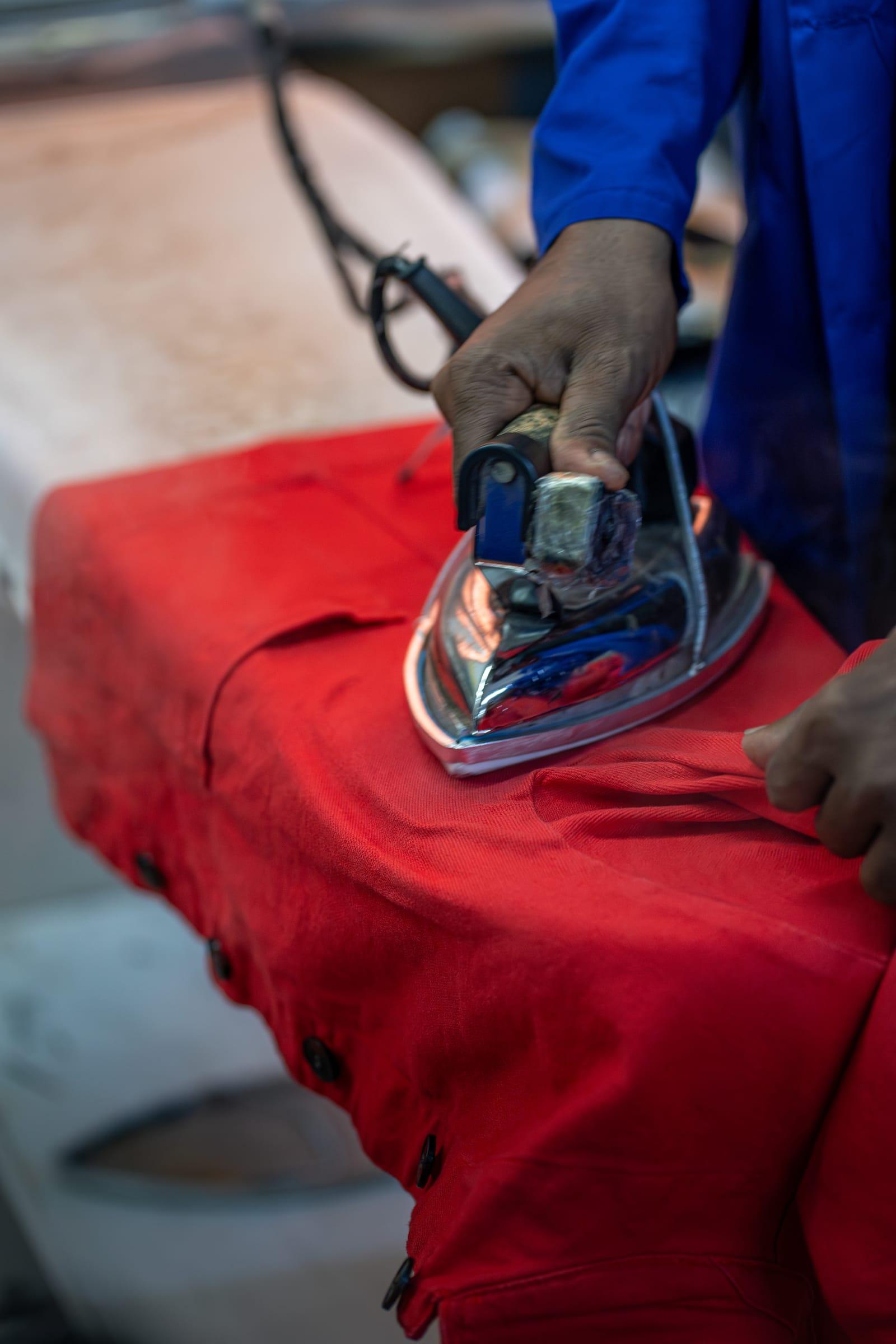
- Rarely necessary on workshop garments, and best avoided directly on retroreflective bands, printed markings and fastenings. For front-of-house or hospitality outfits, where appearance counts, press on the reverse at moderate temperature.
Going further
An issue wearing out faster than planned? Tell us about your conditions of use: the answer is often in the fabric, sometimes in the machine.
Response within 48 hours, no obligation
Related articles
 Procurement & budget
What a work outfit really costs: thinking in cost per wear
Two quotes, two prices — and the cheaper one can cost you double. The cost-per-wear method for comparing workwear offers honestly.
Read the article Safety & PPE
PPE: a guide to equipping your teams and meeting safety standards
A legal obligation and a duty to your staff: how to choose certified, comfortable PPE that genuinely matches the risks of each role.
Read the article Construction & worksites
High-visibility workwear for construction sites: standards and comfort
High-visibility vests, jackets and trousers for construction: standards, comfort and durability. Equip your site teams with PROVETEX.
Read the article