
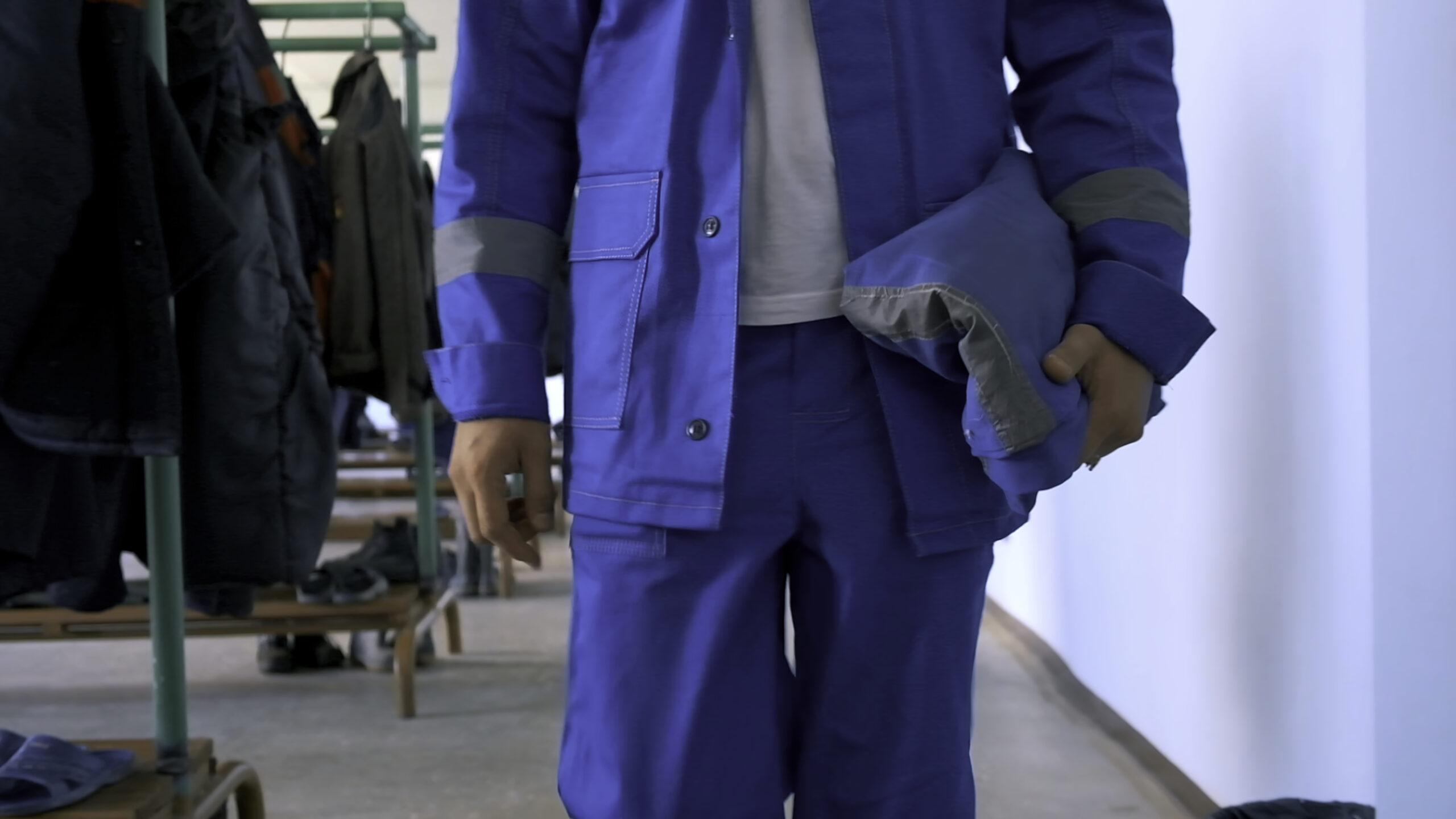
What a work outfit really costs: thinking in cost per wear
On a comparison sheet, two offers come down to two numbers, and the smaller one wins. It is quick, it is defensible in a meeting, and it is the surest way to spend more. Because an outfit is not bought: it is worn, washed, worn out and replaced. And it is over that span — not on the purchase-order line — that the difference is decided.
The short version
- Cost per wear = purchase price ÷ number of wears before replacement. Everything else follows from it.
- An outfit 30% more expensive that lasts twice as long comes out 35% cheaper.
- Add laundering, stock handling, customisation and the cost of an emergency top-up to the calculation.
- The costliest and least quantified line stays downtime: someone waiting for their outfit is not working.
One formula, and everything changes
Cost per wear needs no sophisticated spreadsheet: divide the purchase price of the piece by the number of times it will be worn before replacement. A jacket at 400 dirhams worn 200 times works out at 2 dirhams per wear. The same job done by a 260-dirham jacket that only lasts 90 wears works out at 2.9 dirhams. The cheaper line on the quote is 45% more expensive in use.
The six lines your quote does not contain
The headline price of an outfit rarely represents more than half of what it will cost over its life. Here are the lines that complete the picture, and that are worth costing even roughly: an order of magnitude is enough to flip a decision.
| Cost line | Often forgotten because… | How to estimate it |
|---|---|---|
| Laundering | It is paid from another budget, or by the employee | Washes per year × cycle cost (or laundry rate) |
| Early replacement | It happens after the purchase file is closed | Observed failure rate × unit price |
| Stock handling | It is time, not an invoice | Hours spent per year × loaded hourly cost |
| Emergency top-up | It is handled case by case | Small-run premium + express shipping |
| Downtime | Nobody invoices it | Days waiting × cost of one day on the job |
| Non-compliance | It only materialises at an inspection or an accident | Hard to price, impossible to ignore |
How to measure real lifespan on your own site
Nobody can tell you in advance how long an outfit will last in your conditions: the same set worn in a machine shop and in a warehouse do not have the same life expectancy. The good news is that measuring it is simple and only takes consistency.
- Date every issue when it is handed over, in the size register: one "issued on" column is enough.
- Record each replacement with a three-word reason: normal wear, tear, colour loss, wrong size.
- After a year, count pieces replaced against the total distributed: that gives you an annual renewal rate.
- Divide the unit price by the observed average lifespan. You now have your real cost per wear, for your site.
- Compare role by role: you will often find wear is heavily concentrated on two or three jobs.
- Redirect the budget towards those roles, trading up only where it actually pays.
A buyer who knows their renewal rate negotiates. A buyer who does not is comparing prices by the kilo.
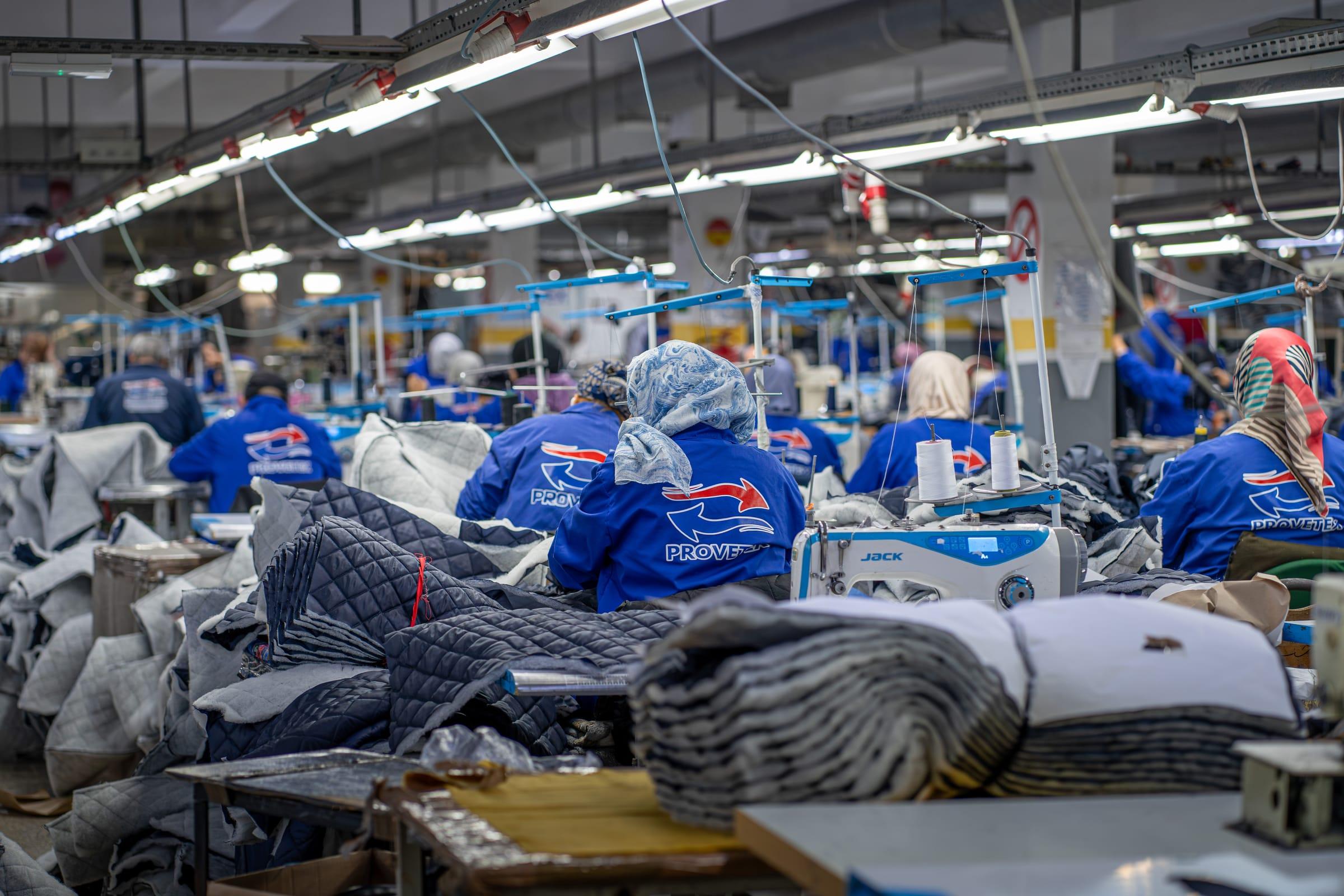
Where a low price is actually paid for
A significant price gap almost always corresponds to a technical trade-off somewhere. That is not necessarily a flaw: on a low-exposure role, a lighter fabric is a perfectly rational choice. The problem starts when the trade-off is not a conscious one.
- Fabric weight: a few dozen grams per square metre less is barely noticeable by hand and very noticeable at the knees and elbows.
- Stitch density and reinforcement at stress points — crotch, armholes, pocket bags.
- The quality of zips and press studs, the leading reason an otherwise intact garment is scrapped.
- Dimensional stability after washing: a garment that shrinks by two centimetres has become one size smaller.
- Colour fastness, especially on bright shades and fluorescents.
- Consistency across the run: the three-hundredth piece must be the twin of the first.
None of this is visible in a photo. It is checked on a sample, by hand. Ask for one systematically before deciding — and have someone who actually does the job wear it for a week, rather than passing it around a meeting room.
Proximity, the hidden variable in the calculation
In a cost-per-wear calculation, supplier distance rarely appears. It should. It drives top-up lead times, the ability to correct a run in progress, the cost of exchanging sizes, and whether a non-conformity can be dealt with by anything other than email. It is the argument we develop in our article on choosing a Moroccan manufacturer over importing — and it can be quantified.
Frequently asked questions about workwear budgets
- How do you calculate the cost per wear of a work garment?
- Divide the unit purchase price by the number of times the piece will be worn before replacement, then add the laundering cost spread over the same number of wears. To get a reliable figure you need to date issues and log replacements for at least a year.
- Should you always choose the toughest fabric?
- No. A very tough fabric is often heavier and less breathable; on a sedentary role or in high heat it will be uncomfortable and therefore worn less. The right call is to trade up where wear is genuinely concentrated and stay modest elsewhere.
- How do you compare two quotes that do not describe the same thing?
- Bring them back to a common frame: fabric composition and weight, finishing and reinforcements, type of customisation, packing, lead time, and top-up conditions. A quote that stays vague on those points is not comparable — which is itself a piece of information.
- Who should pay for workwear?
- In Morocco, the Labour Code (law no. 65-99) places employee health and safety on the employer, which includes supplying the protective equipment the role requires. For presentation outfits unrelated to safety, practice varies and is a matter of internal company policy.
Going further
Send us your current issue and your volumes: we will tell you where the budget leaks, and where there is nothing to gain.
Response within 48 hours, no obligation
Related articles
 Care & durability
Why your workwear wears out too fast — and how to fix it
Temperature, softener, drying, sorting: the care mistakes that shorten the life of workwear, and the simple habits that double it.
Read the article Local manufacturing
Why choose a Moroccan manufacturer over importing
Lead times, customisation, responsiveness, quality control and total cost: the concrete case for local manufacturing over importing.
Read the article Method & logistics
Kitting out 200 people without a single wrong size: the method that works
Fitting day, size set, issue register: the full method for ordering workwear that actually fits your teams.
Read the article