
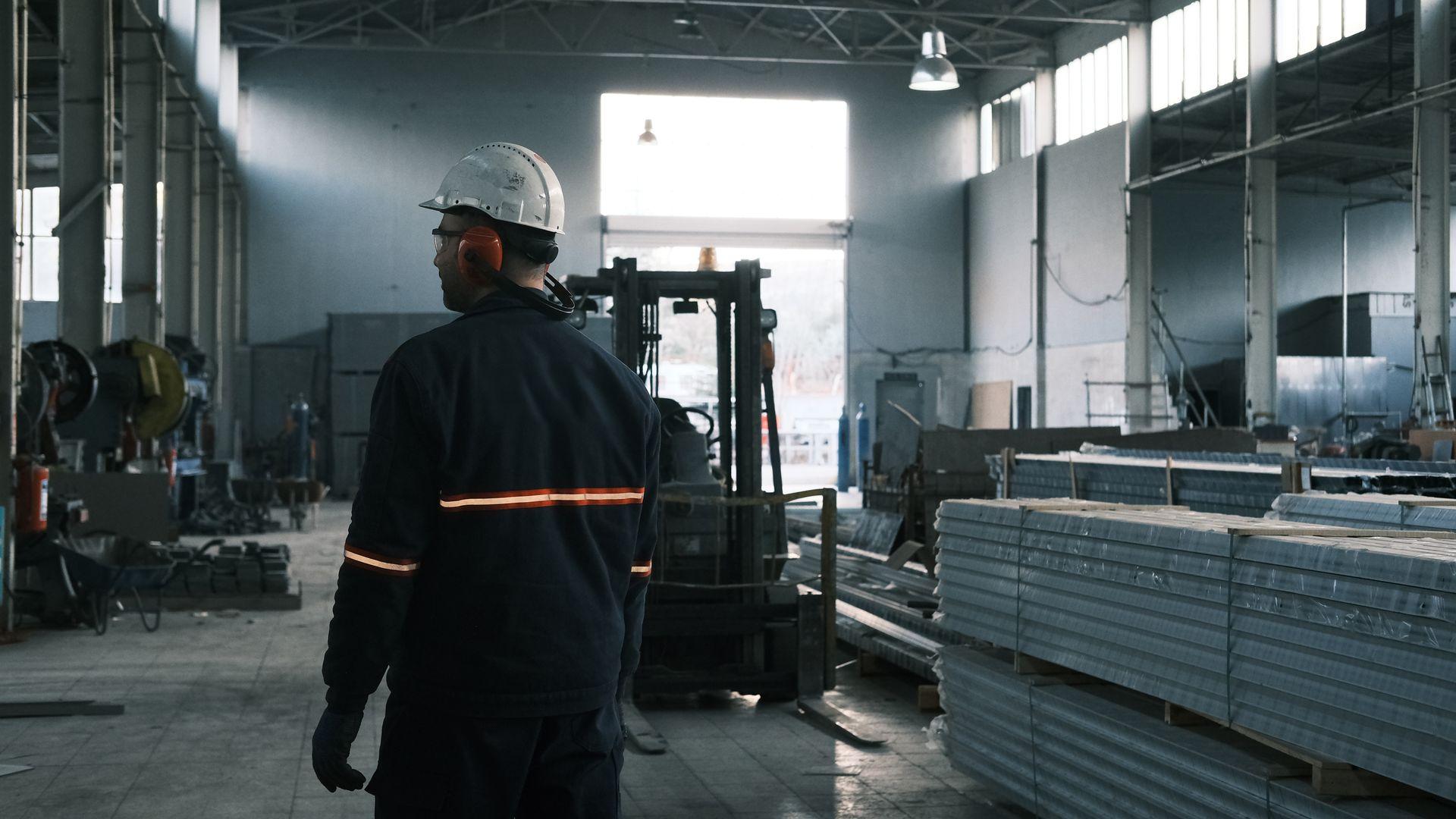
Working at 45 °C: dressing your teams for the Moroccan summer
In July, in Marrakech, in Beni Mellal or on a site on the edge of Casablanca, workwear stops being a comfort question and becomes a safety one. A team that is too hot opens the jacket, rolls up the sleeves, takes off the vest — and ends up exposed to exactly what the outfit was meant to protect against. Dressing properly for summer means, first of all, making sure the outfit stays on.
The short version
- A summer garment is chosen on fabric weight first: dropping from 245 to 190 g/m² changes everything.
- Cotton breathes, polyester dries fast: a well-balanced blend takes the best of both.
- Light colours and a loose cut that lets air circulate beat a shorter garment.
- Covering up remains the best sun protection: a light long sleeve beats a t-shirt in full sun.
Fabric weight: the first lever, and the most ignored
Fabric weight, expressed in grams per square metre, measures mass — and therefore, very directly, what sits on the shoulders and how much heat is held in. An all-round work twill often sits around 240–260 g/m², an excellent compromise from October to May. Above 35 °C, it is a coat. Summer versions typically drop to 180–200 g/m², and the difference is felt within the first hour of the shift.
Cotton, polyester, or both: deciding without dogma
The debate is old and often badly framed. Cotton absorbs moisture and lets air through: it gives that cool feel appreciated early in the day. But once saturated with sweat it stays wet, clings to the skin and dries slowly. Polyester does the opposite: it absorbs little, wicks outwards and dries fast, at the price of a less pleasant feel against the skin and a tendency to hold odour.
| Fibre | What it brings in summer | What to watch |
|---|---|---|
| 100% cotton | Maximum breathability, cool handle, does not melt under heat | Dries slowly, creases, distorts more in the wash |
| 65/35 polycotton | The most common compromise: shape retention, fast drying, controlled cost | Less breathable than pure cotton at equal weight |
| Open-mesh polyester | Fast moisture transport, very light | Avoid near intense heat sources or flame risk |
| Blend with elastane | Freedom of movement, so less fatigue over a long day | Sensitive to high-temperature drying |
Cut less, cover better
The summer reflex is to cut things shorter: short sleeves, shorts, a t-shirt on its own. That is often a mistake, especially outdoors. A light, pale long sleeve shields against direct radiation, reduces skin heating and prevents the sunburn that, accumulated over a season, becomes a genuine health issue. Desert peoples do not dress short, and that is not an accident.
- Favour a loose cut that lets a layer of air move between fabric and skin.
- Look for ventilation: mesh panels under the arms, at the back, behind the knees.
- Prefer light shades outdoors: they reflect part of the radiation instead of absorbing it.
- Think about headwear compatible with the helmet, and neck protection on exposed roles.
- Add a technical wicking base layer: it transforms an outfit's comfort without changing a single seam.
High visibility in full sun: the hard case
This is the most uncomfortable situation, and the most common on sites and roadways. High-visibility clothing imposes minimum areas of fluorescent material and retroreflective banding, which limits how much can be opened up. The answer is not to remove the vest, but to move the visibility onto the lightest possible garment.
- Replace the full high-visibility set with a certified t-shirt or polo, worn on its own in hot weather.
- Choose segmented-band versions: they breathe more than continuous banding.
- Check the class the role requires before lightening: a class 3 is not replaced by a class 1 because it is hot.
- For summer night work, keep the highest class: cooler nights make the trade-off unnecessary.
The detail of classes and required areas is in our article on high visibility in construction, and the matching models are in the safety catalogue.
Clothing is not the whole answer
No fabric compensates for badly organised work. Clothing reduces heat strain, it does not remove it. The most effective levers remain shifting heavy tasks to early morning, accessible shade on outdoor stations, water within a few dozen metres, and attention to new starters, who are not yet acclimatised and pay the heaviest price in the first heat waves.
A good summer garment is the one still fastened at three in the afternoon. Everything else is documentation.
Frequently asked questions about workwear in high heat
- What fabric weight should I choose for summer workwear?
- For outdoor summer use, you are generally looking at 180–210 g/m², against 240–260 g/m² for an all-season fabric. The right trade-off also depends on the abrasion the role involves: going too light on a highly exposed job means replacing outfits twice as often.
- Is cotton or polyester better in very hot weather?
- Cotton feels better against the skin and breathes more; polyester dries far faster. For a role that involves heavy sweating, a blend or an open-mesh polyester is often preferable — except where there is a flame risk, where ordinary polyester must be ruled out.
- Can you work in shorts on a site in summer?
- It depends entirely on the role's risk assessment: knees exposed to impact, splashes, hot surfaces or direct sun. On most sites, light trousers are a far better compromise than shorts, for a smaller comfort difference than people expect.
- Should there be separate summer and winter issues?
- As soon as the annual temperature range is wide — which it is inland in Morocco — a seasonal issue is usually more economical than a single compromise outfit worn reluctantly for six months of the year. Cost-per-wear reasoning lets you check that with figures.
Going further
Teams struggling with the heat in their outfits? Tell us where they work and on which roles: there is almost always a lighter version that keeps the protection.
Response within 48 hours, no obligation
Related articles
Construction & worksitesHigh-visibility workwear for construction sites: standards and comfort
High-visibility vests, jackets and trousers for construction: standards, comfort and durability. Equip your site teams with PROVETEX.
Read the article Safety & PPE
PPE: a guide to equipping your teams and meeting safety standards
A legal obligation and a duty to your staff: how to choose certified, comfortable PPE that genuinely matches the risks of each role.
Read the article Procurement & budget
What a work outfit really costs: thinking in cost per wear
Two quotes, two prices — and the cheaper one can cost you double. The cost-per-wear method for comparing workwear offers honestly.
Read the article