

School uniforms: the back-to-school plan that avoids the last-minute rush
Every year, the same scene plays out in schools: late August, and the office phone never stops. Sizes are missing, one family was never told, the supplier announces a two-week delay and term starts in eight days. None of this is inevitable. A uniform year is prepared like a small industrial project, and it is decided in spring, not in August.
The short version
- Launch the fitting campaign before the end of the school year, not during the holidays.
- Choose fabrics that survive two washes a week for nine months.
- Always keep a buffer stock at the school for new enrolments and accidents.
- An embroidered crest holds and ages better than print on a child's garment.
What a school uniform has to take
A pupil's uniform takes punishment no adult outfit knows: playground ground, chalk, marker pen, meals, games, and two or three machine washes a week. Over nine months that easily adds up to seventy or eighty washes — more than most workwear endures in a year. A fabric that pills or whose colour turns by the third month will be judged, rightly, by every family in the school.
- Colour fastness to washing and light: a navy that turns grey is instantly visible in a line of pupils.
- Dimensional stability: a garment that shrinks penalises the families who wash most often first.
- Abrasion resistance at elbows, knees and seat, the three areas that fail first.
- Reinforced seams at armholes and crotch, the classic failure points on children.
- Genuine comfort: a scratchy collar or a rigid waistband produces a contested uniform by October.
The back-to-school plan that holds
The calendar below starts at the first day of term and works backwards. The durations are orders of magnitude to confirm with your supplier, but the sequence does not change: it is the fitting campaign, not production, that drives everything else.
- March–April: lock the model, the colours and the crest. Approve a complete prototype and have a few volunteer pupils wear it for a day.
- April–May: tell families the final model, the price and the calendar. Late communication is the leading cause of missing orders.
- May–June: run the fitting campaign in school, class by class, with a full size set. This is the decisive step.
- June: consolidate orders, add the buffer stock and send the final file to the manufacturer.
- July–August: production runs. Plan staggered deliveries rather than one drop in the final week.
- Late August: distribution by class, by appointment, with an exchange desk open. Keep the buffer closed until the second week of September.
The question of children's sizes
An adult keeps the same size for years. A ten-year-old can grow six centimetres between a May fitting and September term. That is the particular difficulty of school uniforms, and it is handled by design rather than by guesswork.
- Ask for generous turn-up hems, so trousers or a skirt can be let down a centimetre or two without remaking the piece.
- Favour waists adjustable by internal buttoned elastic for primary years.
- On fast-growing age groups, take the size above rather than the exact size — but never two above, which makes the garment unwearable.
- Fit with the shoes of the coming year, not the ones worn on fitting day.
- Explicitly include a small run of larger sizes in your order for pupils outside the chart.
The rest of the method — size set, time slots, register — is the same as for a company, and we set it out in our sizing guide. A school that keeps a register by pupil gains a full week every year.

The crest, the identity, and what lasts
The uniform is a school's most visible identity carrier. It is worn every day, photographed at prize-givings, taken on school trips. It deserves better than a marking that flakes. On a child's garment washed twice a week, embroidery is the safest option: it outlives the garment and keeps its colours. Prints are tempting for complex artwork, but they age badly on knitwear that stretches.
A good uniform is the one former pupils still have at the back of a wardrobe twenty years later.
The choice between embroidery, sewn patch and print deserves to be settled up front, with a sample in hand. We compared the techniques, their costs and their durability in the article on customisation.
And what about family budgets?
This is the least discussed subject and the one that most determines buy-in. An accepted uniform is one whose cost looks proportionate to its life. A few design decisions help directly: limit the number of compulsory pieces, allow neutral items to be bought freely (white shirt, shoes), and design an outfit that does not date from one year to the next so pieces can pass from one child to the next.
Frequently asked questions about school uniforms
- When should school uniforms be ordered for the new year?
- The order should be consolidated before the summer holidays, which means running the fitting campaign in May or June while pupils are still on site. Starting in July leaves too little time to produce, check and exchange.
- Which fabric should a school uniform use?
- A polycotton blend is the usual choice: it holds its shape, dries fast and takes frequent washing while staying comfortable. The cotton percentage is chosen according to the local climate — more cotton in hot regions, more polyester where fast drying matters most.
- Should the school keep extra stock?
- Yes, always. Late enrolments, mis-estimated sizes and playground accidents are certain; only their quantity is unknown. A buffer concentrated on the middle sizes of each year group prevents most September emergencies.
- Can a uniform be made specifically for our school?
- Yes: colours, cut, crest and finishing details can be defined from an existing model or designed for the school. That is one of the advantages of local manufacturing, where a prototype is approved in weeks rather than months.
Going further
Preparing your school's new year? Let's talk now: the smoothest starts are decided two terms ahead.
Response within 48 hours, no obligation
Related articles
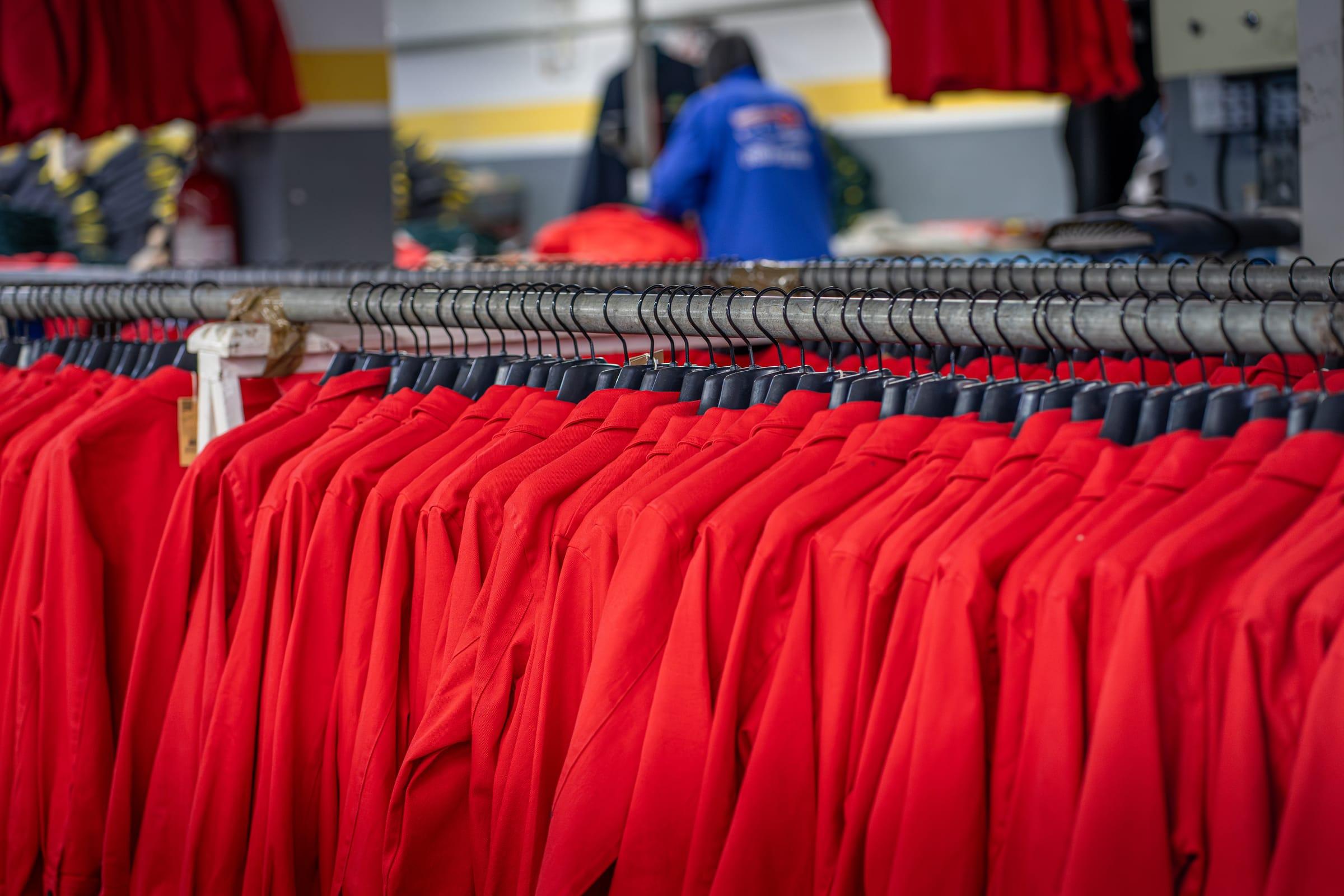 Method & logistics
Kitting out 200 people without a single wrong size: the method that works
Fitting day, size set, issue register: the full method for ordering workwear that actually fits your teams.
Read the article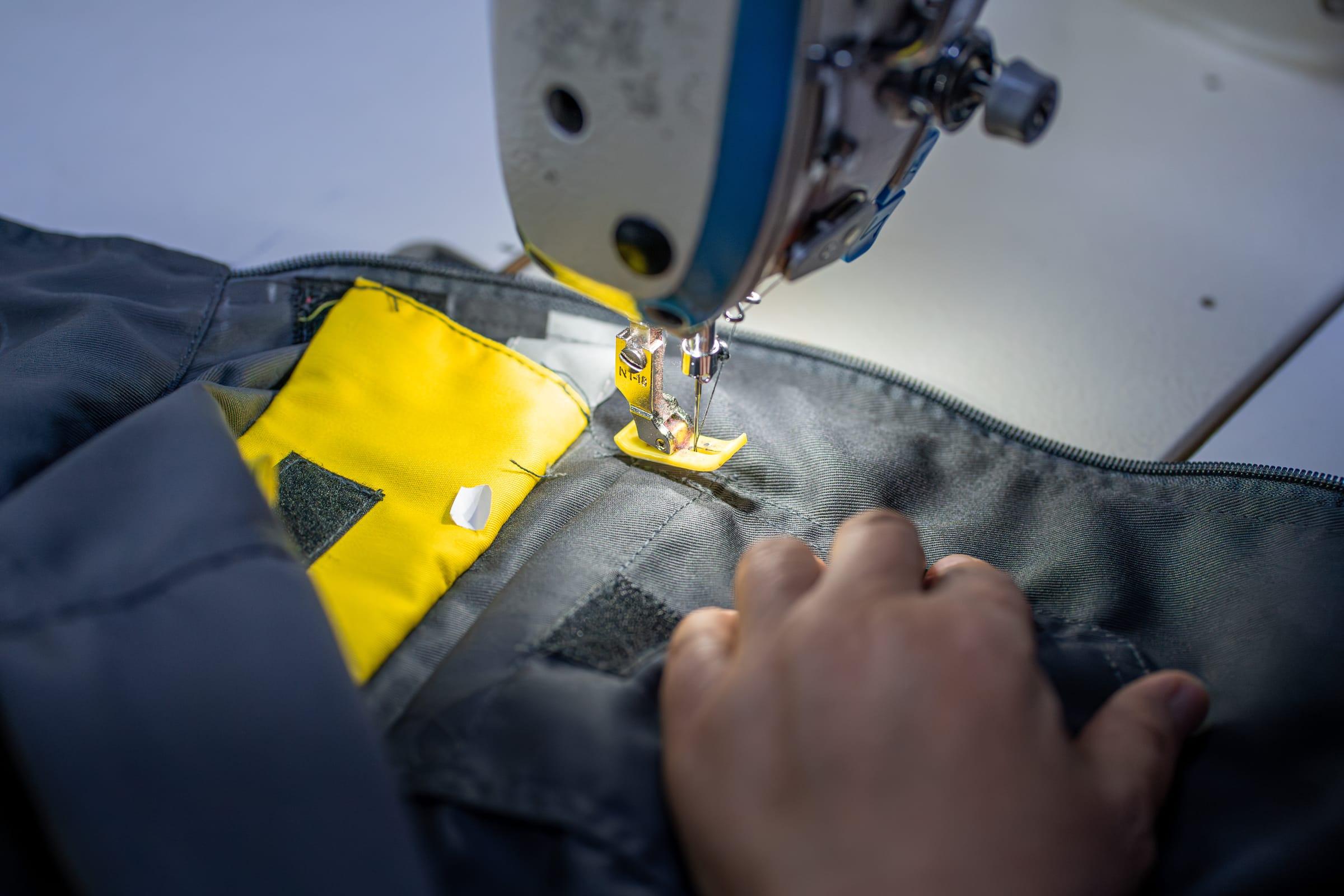 Customisation
Embroidery, screen printing, transfer: which marking for your logo?
A comparison of workwear marking techniques: durability, finish, cost, PPE constraints — and how to choose without regret.
Read the article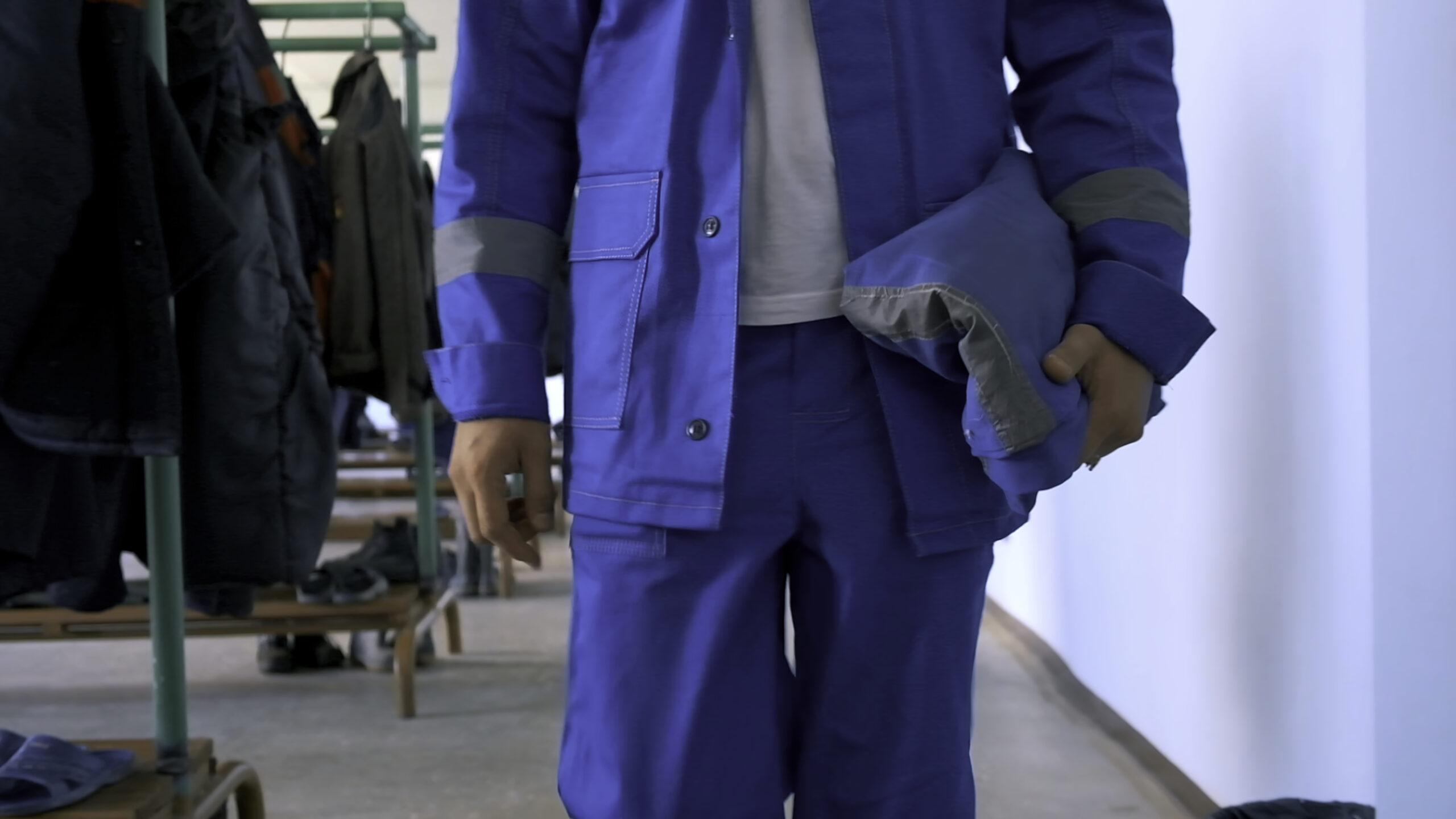 Sector guide
How to choose workwear for your industry
Safety, comfort, brand image: every industry has its own constraints. Our guide to choosing professional workwear that truly fits your business.
Read the article